


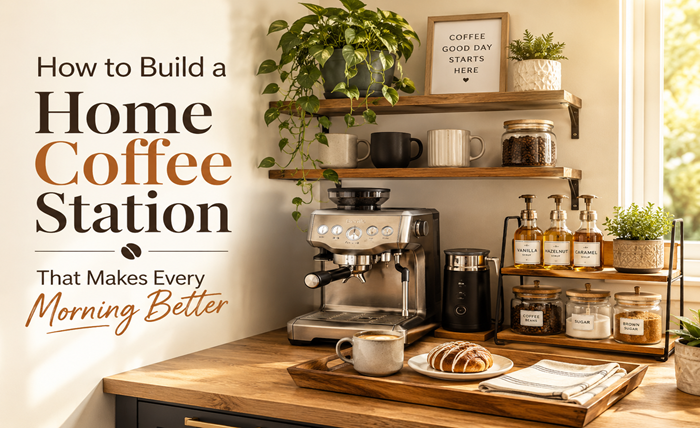
A peaceful morning can disappear quickly when mugs are in one cabinet, filters are in another, and coffee beans are hidden behind pantry supplies. A well-planned home coffee station solves that problem by keeping everything you need in one convenient place. It turns coffee preparation into a simple routine instead of a daily search.
You do not need a large kitchen or an expensive renovation. A section of counter, a compact cart, or an unused corner can work perfectly. The key is to design the space around your real habits. When your brewer, cups, coffee, and everyday extras are arranged logically, mornings feel smoother. The area also becomes easier to clean and restock. With a few practical decisions, you can create a useful coffee space that feels personal without becoming crowded.
Begin With the Way You Make Coffee
Before buying shelves, trays, or containers, think about what happens between entering the kitchen and taking your first sip. Your coffee brewing setup should support that routine.
Consider these questions:
- Do you make one cup or a full pot?
- Do you use beans, grounds, or capsules?
- Do you need a grinder, kettle, scale, or frother?
- Do you add sugar, milk, syrup, or spices?
- Will several people use the area?
Someone who uses a pour-over brewer may need room for a kettle, filters, scale, and carafe. A pod user may need less preparation space but more organized flavor storage.
This step prevents a common mistake: building an attractive display that is awkward to use. The best station is the one that removes unnecessary movement from your morning.
Choose a Convenient Location
The ideal location is near an electrical outlet, within easy reach of water, and away from areas needed for cooking. There should also be enough room to open lids, release steam, pour safely, and wipe the surface.
Use a Section of Kitchen Counter
A clear section of counter is the easiest option. Place the machine close to the outlet and keep frequently used supplies beside it. This works well when the area is not needed for meal preparation.
Turn an Empty Corner Into a Coffee Area
Many practical coffee corner ideas begin with overlooked space. A corner beside the refrigerator, a small dining-room wall, or the end of a kitchen cabinet can become a dedicated coffee area.
A narrow console, small cabinet, or sturdy side table can provide the main surface. One shelf above it can hold mugs, extra coffee, and lightweight accessories.
Use a Rolling Cart
A rolling cart works well for renters and smaller homes. Keep the brewer on top, daily supplies on the middle shelf, and refills below. Among flexible coffee station ideas, this is one of the easiest because it requires no permanent installation.
Select Only the Equipment You Use
Once the location is ready, decide what deserves permanent space. A practical coffee brewing setup may include:
- A drip machine, espresso machine, pod brewer, or pour-over device
- A grinder, kettle, or milk frother
- Mugs and travel cups
- Coffee beans, grounds, filters, or capsules
- Measuring spoons, stirrers, or napkins
Keep daily tools visible and move occasional items elsewhere. A French press used once a month does not need to occupy valuable counter space.
When comparing coffee makers, focus on available space, serving capacity, cleaning requirements, and the type of coffee you normally drink. A simple machine that fits your routine is usually more useful than a larger model with features you rarely touch.
Leave some open space beside the brewer for a mug, milk, coffee bag, or spoon. A station needs working room, not just storage.
Improve Coffee Equipment Organization
Strong coffee equipment organization makes the area faster to use and easier to maintain. Group items by frequency rather than appearance.
Keep Daily Supplies Within Reach
Coffee, filters, favorite mugs, and regular sweeteners should be close to the brewer. A shallow tray can hold smaller items and stop them from spreading across the surface.
Airtight containers help protect beans and grounds from moisture and strong kitchen odors. Clear containers also make it easy to see when supplies are running low.
Use Vertical Storage
When counter space is limited, use the wall. Floating shelves, mug hooks, wall baskets, and pegboards create storage without reducing preparation space.
Place light items above the counter and keep heavy equipment on a stable surface. This improves coffee equipment organization without making the area feel crowded.
Store Refills Separately
Do not display every unopened coffee bag, syrup bottle, or box of capsules. Keep a manageable amount at the station and store backup stock in a pantry or lower cabinet.
Add Personality Without Adding Clutter
The most useful coffee station ideas balance function with a small amount of decoration. The area should feel welcoming, but every decorative item reduces working space.
Simple additions may include:
- A small plant or framed print
- A favorite mug on a hook
- A washable tray or mat
- A jar of cinnamon or cocoa
- A small bowl for sugar packets
Choose items that are easy to clean. Coffee grounds, water drops, and milk splashes are normal, so delicate objects can become frustrating.
For coordinated coffee corner ideas, repeat materials already used in the room. Similar wood tones, ceramic colors, or metal finishes can connect the station to the kitchen without making it look staged.
Design for Fast Cleanup
A coffee area will not stay pleasant unless cleaning is easy. Place a washable mat under the machine to catch drips and loose grounds. Keep a cloth nearby in a drawer or basket, and provide a convenient place for used filters or capsules.
A simple weekly routine can include:
- Wiping the machine and surrounding surface
- Washing trays and reusable containers
- Refilling coffee and sweeteners
- Cleaning the grinder
- Checking filters and supplies
- Descaling appliances as recommended
When each item has a fixed location, this routine takes little time. It also keeps the coffee brewing setup ready for the next morning.
Prepare for Busy Mornings
The station should still work when you are tired, late, or making drinks for several people.
Refill the water reservoir the night before when appropriate. Set out a clean mug, check the coffee supply, and keep travel cups nearby. Use an automatic timer when the machine provides one.
In a shared household, divide supplies by preference. One basket can hold tea and hot chocolate, while another contains coffee capsules or sweeteners. A small bin nearby can also help with wrappers, filters, and used pods.
Common Mistakes to Avoid
Even a stylish home coffee station can become inconvenient when design takes priority over function. Avoid these mistakes:
- Placing the brewer too far from an outlet
- Storing mugs at an uncomfortable height
- Filling the surface with decorative objects
- Keeping heat-sensitive items beside hot equipment
- Forgetting space for pouring and cleaning
- Buying organizers before measuring
- Displaying more supplies than you use
Start with the essentials and add items only when they solve a genuine problem. A focused station usually works better than an overcrowded display.
Frequently Asked Questions
How much space is needed for a coffee station?
A small section of counter or the top of a compact cart may be enough. Measure the largest appliance first and leave additional space for pouring, opening lids, and cleaning.
What belongs in a basic coffee brewing setup?
Most people need a brewer, coffee, mugs, filters or capsules, and a measuring tool. A grinder, kettle, frother, syrups, and sweeteners depend on personal preference.
How can I organize a coffee area in a small kitchen?
Use mug hooks, floating shelves, stackable containers, and one narrow tray. Keep only daily supplies on display and place backup stock elsewhere.
Can I create one without remodeling?
Yes. Many coffee corner ideas use furniture already available, including a sideboard, bookshelf, rolling cart, or unused counter. Removable hooks and shelves can add storage without permanent changes.
Conclusion
A well-designed home coffee station makes mornings easier by keeping the tools, ingredients, and cups you use in one logical place. Begin with your daily routine, choose a convenient location, and give permanent space only to equipment that earns it.
Good coffee equipment organization is more valuable than expensive décor. Keep everyday supplies nearby, use vertical storage when space is limited, and leave enough room to prepare and clean comfortably. The station does not need to look like a showroom. It simply needs to fit your home and reduce friction. As your habits change, adjust the arrangement so it continues to serve you. The result is a practical corner that helps each morning start with less searching, less clutter, and a better cup of coffee.
